
Convert
Online Booking
Patients book an appointment on your own site, at any hour, without being handed off to a third-party screen.
Live in demo
What it is
A booking flow that lives inside your website rather than sending the patient to an external scheduling tool. The patient chooses a treatment, sees availability, and confirms — all on pages carrying your name, your photography and your prices.
Why it matters to your bottom line
- Every handoff to a third-party booking screen loses people. The patient who was ready thirty seconds ago now faces an unfamiliar brand, a sign-up form, and a moment of doubt about whether they are still dealing with you.
- Roughly half of aesthetic enquiries happen outside working hours. A phone number is not an answer to somebody deciding at eleven at night — by morning they have booked with whoever made it easy.
- Booking on your own domain means the enquiry data is yours. You can see which treatments people try to book, when, and where they abandon.
How it works here
Choose
The patient picks a treatment from your actual menu, with your pricing and your description — not a generic service list.
Confirm
Name, contact and preferred time are captured in one short step. Deposits can be taken here when that is part of your build.
Land
The booking arrives with the patient's stated need attached, so whoever prepares for that appointment already knows what it is about.
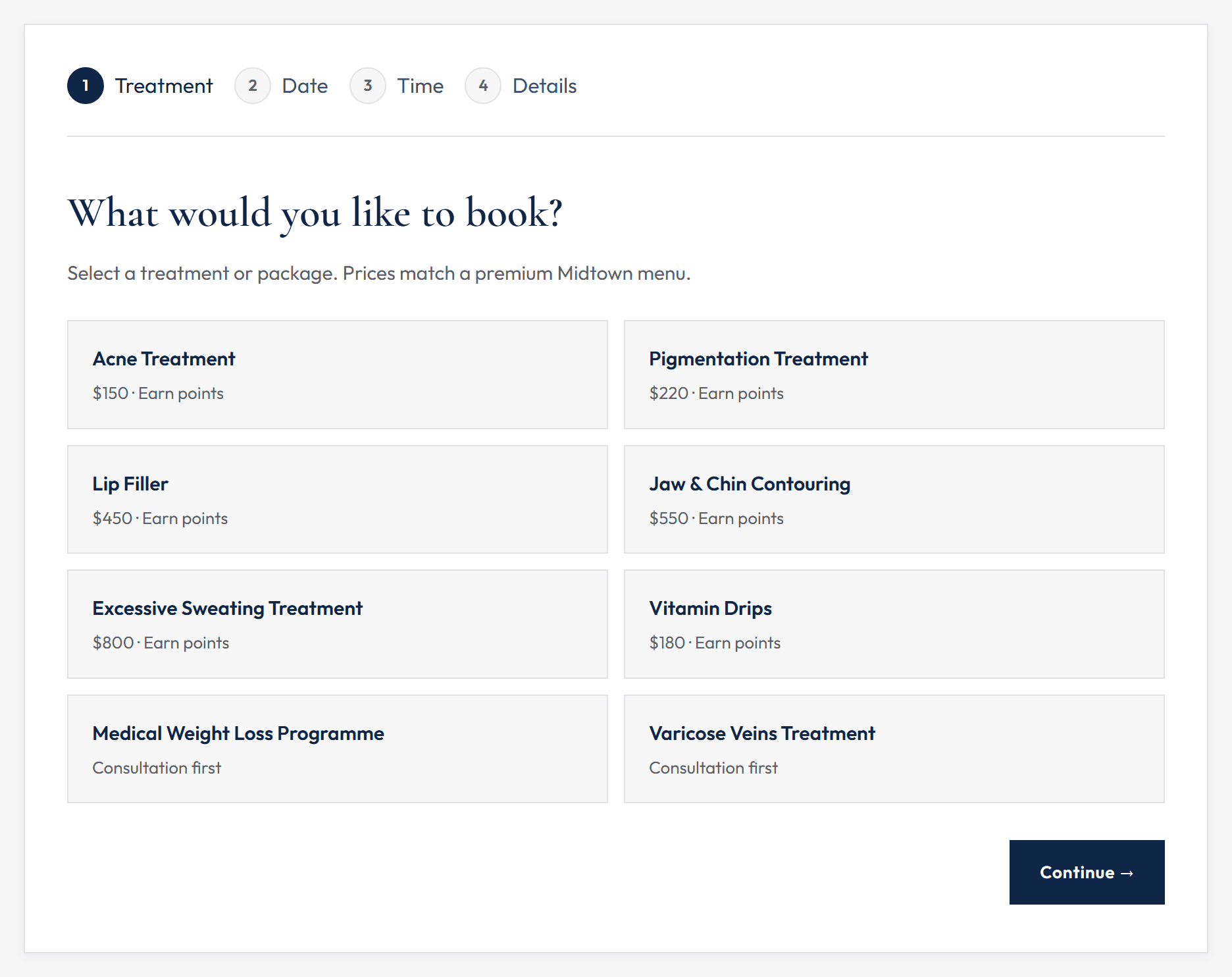
See it working
This is live on the demo practice — use it rather than take our word for it.
Questions owners ask
- We already use a scheduling tool. Does this replace it?
- It can, or it can sit in front of it. The important change is that the patient never sees the handoff — the moment of doubt happens at the seam between your brand and somebody else's.
- What about double bookings?
- Availability is driven by one source of truth. The failure mode worth avoiding is two systems that each think they own the diary, which is exactly what a bolted-on plugin produces.
Related
Want this working in your practice?
A short Discovery conversation is enough to know whether it belongs there — and what it would cost to keep doing without it.